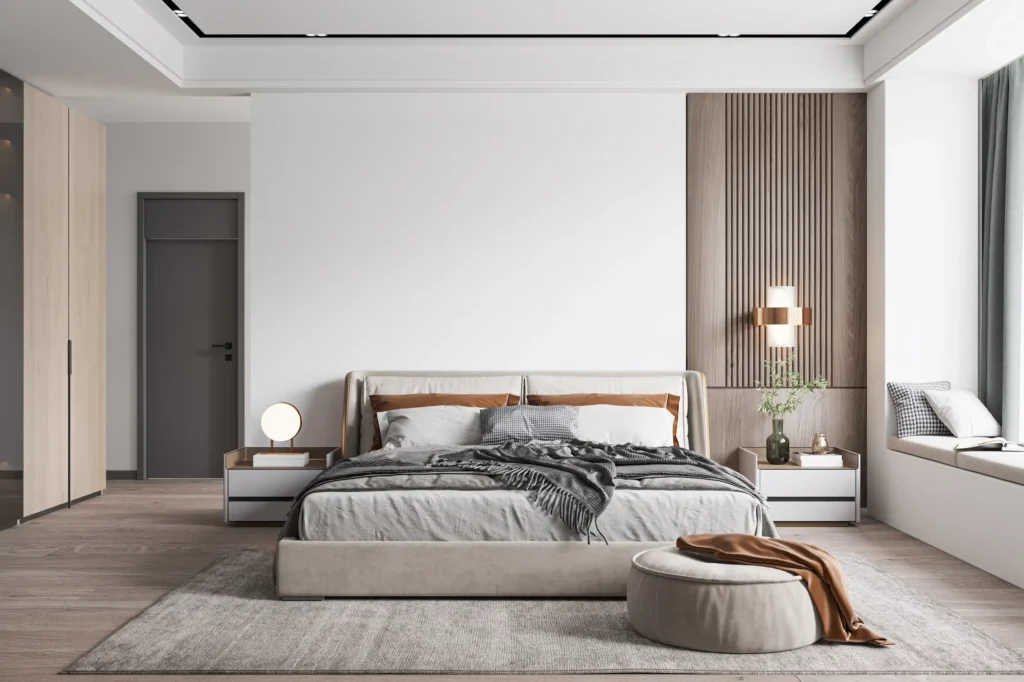
In the world of high-end interior design, the definition of luxury has shifted from overt opulence to a more profound, quiet sophistication. Today, the most successful residential projects are those that act as a sanctuary, spaces that don’t just look beautiful but actively contribute to the emotional and physical wellbeing of their inhabitants. At Melon Design Studio, we approach luxury residential design through the lens of “The Architecture of Calm,” where every material, light source, and spatial boundary is meticulously planned to create a sense of effortless serenity.
1. Balancing modern minimalism with organic warmth
A common misconception in contemporary design is that minimalism equates to coldness. On the contrary, true minimalist luxury is about the curation of space to allow the mind to rest. The challenge lies in stripping away the unnecessary while retaining a sense of “soul” and comfort. We achieve this by layering neutral palettes with rich, organic textures, think of the juxtaposition between polished stone and soft, hand-woven fabrics.
This balance is the cornerstone of our philosophy. By using a foundation of muted tones, we create a timeless canvas that highlights the architectural bones of a home. This approach allows the “noise” of the outside world to fade away the moment you cross the threshold, replaced by a visual harmony that feels both expansive and protective.
2. The role of custom millwork in spatial continuity
One of the most powerful tools in creating a high-end residential environment is custom millwork. Unlike off-the-shelf solutions, bespoke cabinetry and wall paneling allow us to treat the interior of a home as a singular, sculptural entity. When wood accents extend seamlessly through hallways or integrate into the primary suite, they create a sense of “flow” that guides the eye and the body through the space.
In our project Peninsula I, we utilized vertical wood accents and tailored detailing to elongate the architecture and add a layer of warmth to the open-concept layout. This technical precision doesn’t just provide storage or decorative flair; it provides architectural rhythm. Custom millwork hides the complexities of modern life, wiring, climate control, and clutter. Leaving behind only the clean lines and noble materials that define a luxury retreat.
3. Sculptural lighting and the choreography of shadow
Lighting is the most emotive element of interior architecture. In luxury residences, we move beyond basic illumination to treat light as a medium for choreography. Strategic lighting design involves a mix of three layers: ambient, task, and accent lighting. However, the true “secret” to a high-end atmosphere is the use of indirect and sculptural lighting.
By hiding light sources within coves or behind architectural features, we create a soft, ethereal glow that mimics natural light. This reduces eye strain and signals the nervous system to relax. Sculptural pendants, on the other hand, act as “jewelry” for the room, providing a focal point that anchors the design. The interplay between light and shadow adds depth and mystery, ensuring that the home transforms beautifully from a bright, functional morning space to a moody, sophisticated evening sanctuary.
4. Curated international art and personal identity
A luxury residence should never feel like a showroom; it must be a reflection of the owner’s history and taste. Integrating international art and curated accents is essential for adding personality and “soul” to a minimalist backdrop. Whether it is a collection of Mexican contemporary art or Italian sculptural furniture, these pieces act as conversation starters and emotional anchors.
The key to successful curation is “edit.” In a high-end home, every object must have the space to breathe. By carefully selecting pieces that contrast with the neutral palette, through color, scale, or historical era. We create a vibrant dialogue between the architecture and the interior. This layered approach ensures that the home feels lived-in and deeply personal, despite its refined and sophisticated finish.
5. Integrating panoramic views with interior sanctuary
For properties in locations like Aventura or Miami, the view is often the most valuable “material” in the project. The challenge for an interior designer is to embrace these panoramic vistas without making the interior feel exposed or secondary. We solve this by choosing furniture layouts that prioritize the view while creating “enveloping” seating arrangements that feel secure.
Using low-profile furniture and sheer window treatments allows the horizon to enter the room, while the choice of interior materials, like matte woods and soft tonal rugs, grounds the space. This dialogue between the “vastness” of the outdoors and the “intimacy” of the indoors is what creates a truly world-class residence. It is a technical and creative balancing act that ensures the home is a vantage point for the world outside while remaining a private, sophisticated sanctuary within.